
Blog

  • The Best Korean Hair Masks Repair Damage and Seriously Boost Shine

    The Best Korean Hair Masks Repair Damage and Seriously Boost Shine

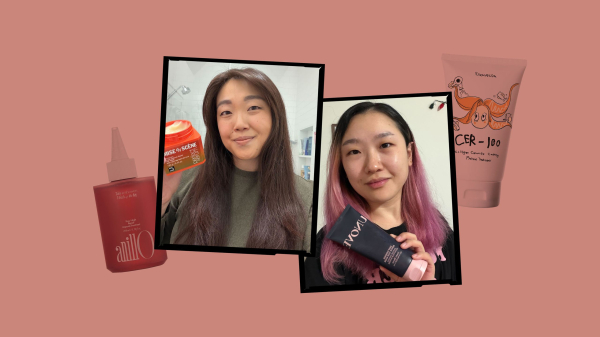
    Image contains Allure editors with their favorite Korean hair masks surrounded by a collage of Korean hair masksCollage: Jemeria Davison; Source images: Courtesy of Allure editors and brandsSave StorySave this storySave StorySave this story

    The best Korean hair masks are in a league of their own because it comes down to philosophy as much as ingredients. According to Cherin Choi, a hairstylist and colorist based in Los Angeles, the biggest shift she’s seen is the “skinification” of hair care. “Korean masks treat the scalp like an extension of your face,” she says, which means formulas are designed to support a healthy foundation first—not just gloss over damage with heavy oils and silicones.

    That’s why many K-beauty hair masks, from editor favorites like Unove to viral hits like Elizavecca, lean lighter in texture but deeper in treatment. Instead of relying solely on thick oils for instant slip, these formulas focus on what Choi calls an “inner repair” approach, using skin care-adjacent ingredients like fermented extracts, ceramides, and collagen to strengthen hair from the inside out. The result is often rich, sensorial textures that rinse clean, boost elasticity and shine, and leave hair bouncy (not flat or coated). Think facial-grade care for your scalp and strands, delivering that coveted glass-hair finish without buildup.

    Our Top Korean Hair Masks

    • Best Overall: Unove Deep Damage Repair Hair Mask, $26
    • Best for Thick Hair: Mise en Scène Argan Oil Repair Mask, $24
    • Best for Fine Hair: Elizavecca Cer-100 Collagen Coating Hair Protein Treatment, $9
    • Best for Damaged Hair: CosRx Peptide 132 Hair Bonding Repair Treatment, $20
    • Best for Hair Growth: Ryo Damage Care & Nourishing Treatment, $19
    • Best for Curly Hair: British M Hydrate Hair Butter, $34
    • Best Leave-in Treatment: Anillo Rosy Night Repair Hair Essence, $18

    Frequently Asked QuestionsAccordionItemContainerButtonLargeChevron

    • What makes Korean hair masks different from Western hair masks?
    • Are Korean hair masks good for fine hair?
    • Meet the experts
    • How we test and review products
    • Our staff and testers

    Best Overall: Unove Deep Damage Repair Hair Mask
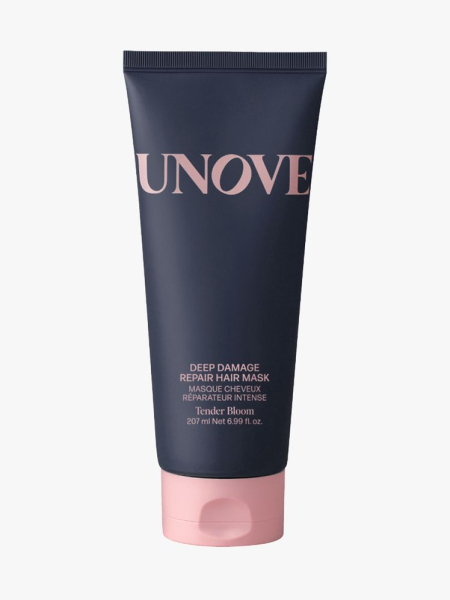
    Unove Deep Damage Repair Hair Mask in branded tube component on a light gray backgroundSave to wishlistSave to wishlist

    Unove

    Deep Damage Repair Hair Mask

    $26

    Amazon

    $26

    Sephora

    Allure commerce editor Sarah Han applying the Unove Deep Damage Repair Hair Mask

    Sarah Han

    Why it's worth it: Like its parent company, Dr.ForHair, Unove approaches hair care the way K-beauty treats skin by prioritizing gentle, restorative care. The Deep Damage Repair Hair Mask is a rinse-out mask designed to fix the damage heat tools, bleach, and color treatments leave behind. The formula packs 31 bond-building proteins and amino acids sourced from milk, wheat, corn, and soy, which work to smooth frizz, reduce breakage, and restore silky slip after just a few uses. “If your hair feels like straw from heat or bleach, this is the holy grail,” says Choi. She notes that unlike heavier Western masks that simply coat the hair, this one “melts into the strand to help restore the actual protein structure,” delivering Dr.ForHair’s signature glass-hair smoothness. The result is “weightless movement and insane shine,” she adds—silky, reflective hair that still keeps its natural bounce and volume.
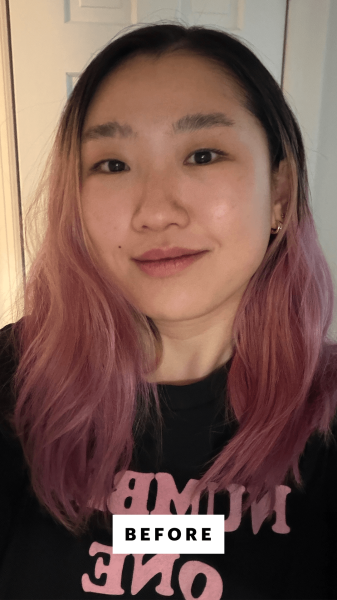
    Image may contain Face Head Person Photography Portrait Adult Happy Smile Cosmetics Lipstick Body Part and Mouth

    Han before applying the Unove Deep Damage Repair Hair Mask
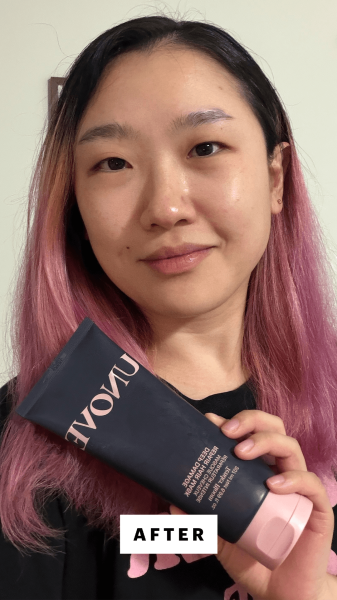
    Image may contain Person Head Face Photography Portrait Happy and Smile

    Han after applying the Unove Deep Damage Repair Hair Mask

    Tester feedback from commerce editor Sarah Han

    AccordionItemContainerButtonLargeChevron

    "Korean skin care and makeup have been staples in my beauty routine for years, but hair care is a category I'm eager to familiarize myself more with. Therefore, buying Unove's uber-popular Deep Treatment EX during a recent vacation to Seoul was necessary and justified. The moment it touched my extra-dry, tangled hair in the shower (seriously, I was struggling to rake my fingers through my hair after shampooing), I literally felt my strands glossing over and instantly softening…like magic. I really appreciate that this mask only needs one to three minutes to do its thing—I'm far too impatient to be standing in the shower for a full 10 minutes. My hair always feels reborn after I use this Unove treatment…especially when I've waited a week to wash my hair, and I'm convinced my blow-dryer brush glides through my freshly-washed hair more effortlessly. (Also, for context, I refreshed my pink with a toning shampoo. The mask didn't do that on its own!)” —Sarah Han, commerce editor

    More to know

    AccordionItemContainerButtonLargeChevron

    • Key ingredients: hydrolyzed keratin, proteins, amino acids, plant-based oils (olive, macadamia, argan, sunflower seed, and camellia)
    • How to use: after shampooing, gently squeeze out excess water, leave in for 1 to 2 minutes, then rinse thoroughly
    • Fragrance-free: no

    Best for Thick Hair: Mise en Scène Argan Oil Repair Mask
    Mise en Scène Argan Oil Repair Mask in branded component on a light gray backgroundSave to wishlistSave to wishlist

    Mise en Scene

    Argan Oil Repair Mask

    $24 $20 (17% off)

    Amazon

    $18

    Olive Young

    Allure contributing commerce writer Christa Joanna Lee applying the Mise en Scène Argan Oil Repair Mask

    Christa Joanna Lee

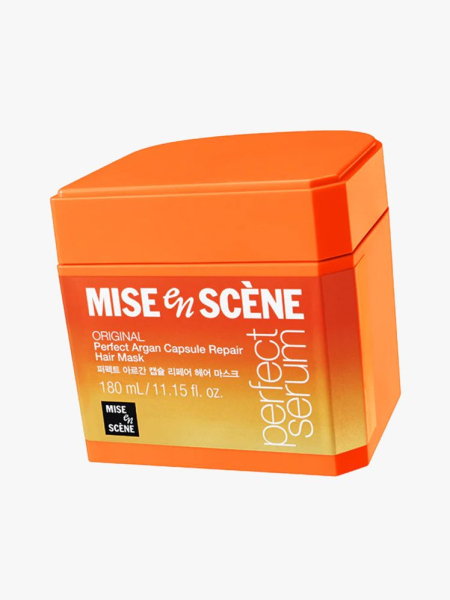
    Why it's worth it: If you swear by Mise En Scène’s editor-favorite Perfect Serum, consider the Argan Oil Repair Hair Mask its equally hardworking, frizz-fighting partner in crime. It delivers the same shine-boosting, smoothing payoff, but in a richer, rinse-out formula designed to rehab dry, damaged, or overprocessed hair. What sets this mask apart is the brand’s capsule technology, which delivers argan oil, amino acids, and keratin-like proteins to improve porosity from within, smooth split ends, and reinforce the cuticle.

    “It’s surprisingly rich for a K-beauty product,” yet delivers deep moisture without leaving hair feeling coated or greasy, says Marie Jhin, MD, a board-certified dermatologist based in San Carlos, California. True to its K-beauty roots, the formula also includes panax ginseng root extract to support stronger-looking hair and laminaria japonica (kelp) extract, rich in minerals that help boost hydration and elasticity. The result is hair that feels softer and silkier, with a high-gloss shine that stands up to heat and humidity—pure glass-hair goals.
    Lee before applying the Mise en Scène Argan Oil Repair Mask

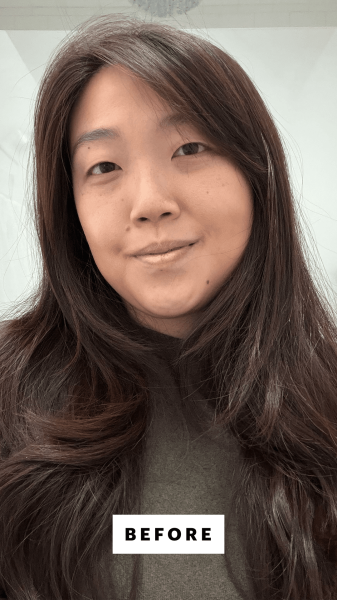
    Lee before applying the Mise en Scène Argan Oil Repair Mask

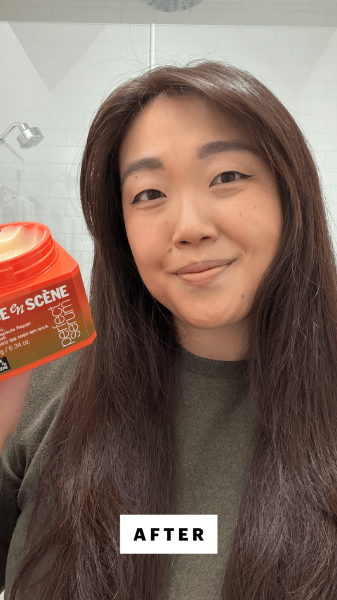
    Christa Joanna LeeLee after applying the Mise en Scène Argan Oil Repair Mask
    Lee after applying the Mise en Scène Argan Oil Repair Mask

    Christa Joanna Lee

    Tester feedback from contributing commerce writer Christa Joanna Lee

    AccordionItemContainerButtonLargeChevron

    “I’ve just had my once-a-year haircut, so my ends were actually in pretty good shape—but the cold, dry weather where I live has completely zapped my hair of moisture and shine. The Mise en Scène Argan Oil Repair Mask is very thick and rich when you scoop it out, so I was genuinely surprised by how quickly it absorbed without weighing my hair down. It instantly detangles, and the scent is so good. My only qualm is standing around in a robe in the cold while it does its thing—but, that’s true of any leave-in—and it works so well at nourishing my dry hair that I’m still excited to use this in the shower all season long.” —Christa Joanna Lee, contributing commerce writer

    More to know

    AccordionItemContainerButtonLargeChevron

    • Key ingredients: argan oil, amino acids, proteins, panax ginseng root extract, laminaria japonica (kelp) extract
    • How to use: after shampooing, gently towel-dry your hair, leave in for 3 to 5 minutes, then rinse thoroughly
    • Fragrance-free: no

    Best for Fine Hair: Elizavecca Cer-100 Collagen Coating Hair Protein Treatment
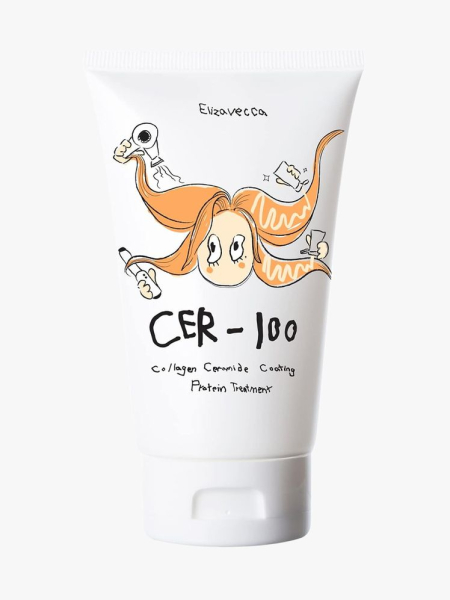
    Elizavecca Cer-100 Collagen Coating Hair Protein Treatment in branded tube component on a light gray backgroundSave to wishlistSave to wishlist

    Elizavecca

    Cer-100 Collagen Coating Hair Protein Treatment

    $9 $8 (11% off)

    Amazon

    $11

    Olive Young

    Allure contributor Devon Abelman applying the Elizavecca Cer-100 Collagen Coating Hair Protein Treatment

    Devon AbelmanElizavecca Cer-100 Collagen Coating Hair Protein Treatment in branded tube component on a light gray backgroundSave to wishlistSave to wishlist
    Elizavecca

    Cer-100 Collagen Coating Hair Protein Treatment

    $9 $8 (11% off)

    Amazon

    $11

    Olive Young

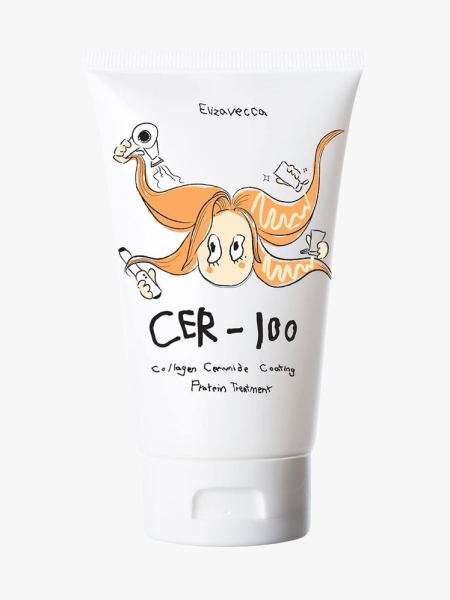
    Why it's worth it: K-beauty doesn’t believe in limiting good ingredients to just one category. Collagen and ceramides, staples in Korean skin care, show up here to support hair that’s feeling weak, dry, or overworked. “This little tube is a powerhouse for a quick five-minute fix,” says Choi, who explains that these ingredients act “like cement to help hold the hair cuticle together,” improving elasticity and making strands easier to detangle. She especially recommends it for anyone needing an instant “snap-back” in strength and softness, noting that its lightweight texture is a big reason it’s gone viral. “It reduces frizz, adds shine, and gives a soft texture,” adds Dr. Jhin. The protein-rich formula reinforces compromised strands from the inside out, making it especially beneficial for hair that’s fine, dry, or color-damaged.

    Tester feedback from contributor Devon Abelman

    AccordionItemContainerButtonLargeChevron

    “One of the first K-beauty hair products on my radar back in 2016 was the CER-100 Collagen Ceramide Coating Protein Treatment, but I only tried it recently. I have no idea why I waited so long, but now I get what all the hype is about. My hair, which I dye ruby wine once a month, was a dry, tangled mess when I hopped in the shower. After shampooing, I saturated my hair in this protein treatment, and it effortlessly unraveled every knot in about a minute flat. I rinsed it out after about three minutes, and my hair felt like cashmere.” —Devon Abelman, contributor

    More to know

    AccordionItemContainerButtonLargeChevron

    • Key ingredients: keratin, ceramides, and hydrolyzed wheat, corn, soy proteins
    • How to use: after shampooing, gently towel-dry your hair, leave in for 5 to 20 minutes, then rinse thoroughly
    • Fragrance-free: no

    Best for Damaged Hair: CosRx Peptide 132 Hair Bonding Repair Treatment
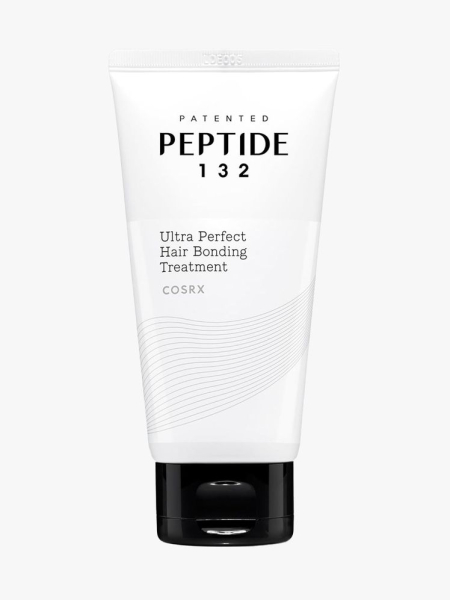
    CosRx Peptide 132 Hair Bonding Repair TreatmentSave to wishlistSave to wishlist

    Cosrx

    Peptide 132 Hair Bonding Repair Treatment

    $20

    Amazon

    $24

    Yesstyle

    Why it's worth it: First things first, hair bond treatments aren’t really glue for split ends (those still need a trim, sorry). But it can help prevent new damage, which is where CosRx’s Peptide 132 Hair Bonding Repair Treatment comes in. This lightweight, rinse-out treatment focuses on reinforcing the hair’s internal structure, making strands stronger, smoother, and less prone to snapping over time. The star is proprietary Peptide-132, which supports keratin bonding and helps recharge weakened hair proteins. It’s paired with hydrolyzed vegetable protein, low-molecular-weight collagen, and 18 types of amino acids. As hair is made from keratin (which is built from many different amino acids), this broad amino-acid blend helps patch porous areas, improve elasticity, and support moisture balance without stiffness. True to K-beauty’s skin-care-for-hair approach, the formula also includes camellia seed oil, rice bran oil, and kelp extract, plus biotin, panthenol, and niacinamide to condition both hair and scalp.

    Tester feedback from senior commerce director Shanna Shipin

    AccordionItemContainerButtonLargeChevron

    “I absolutely love the CosRx Peptide 132 hair system. The shampoo is a gentle but effective cleanser—almost like a detox shampoo that really lifts product buildup, dandruff, and oil from your scalp. I would only use it every other shower because of how effective it is! The CosRx Peptide 132 Hair Bond Repair Treatment has an interesting, thick, almost coagulated texture, and a little bit goes a long way. The oil serum has also been great with extra dry ends and doesn't leave your hands feeling super greasy.” —Shanna Shipin, senior commerce director

    More to know

    AccordionItemContainerButtonLargeChevron

    • Key ingredients: Peptide-132, low-molecular-weight collagen, amino acids, camellia seed oil, rice brain oil, kep, biotin, panthenol, niacinamide
    • How to use: after shampooing, gently squeeze excess water from hair and apply treatment mid-length to ends; then rinse
    • Fragrance-free: no

    Best for Hair Growth: Ryo Damage Care & Nourishing Treatment
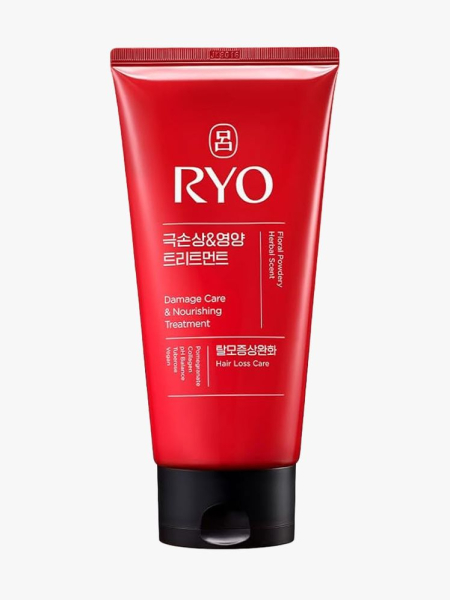
    Ryo Damage Care & Nourishing Treatment in branded tube component on a light gray backgroundSave to wishlistSave to wishlist

    Ryo

    Damage Care & Nourishing Treatment

    $19

    Amazon

    $23

    Yesstyle

    Why it's worth it: If you’ve ever wondered what makes Korean hair care feel so different, Ryo is a perfect example grounded in hanbang. This traditional Korean herbal medicine philosophy uses time-honored botanicals (like ginseng and camellia) to support long-term strength and balance, rather than just quick cosmetic shine. Here, panax ginseng root extract takes center stage, paired with camellia japonica and green tea seed oils to nourish without weighing hair down. You’ll also find licorice extract, pomegranate, and caffeine, ingredients often used in Korean scalp care to create a healthier foundation for growth. Multiple forms of hyaluronic acid and barrier-supporting lipids help smooth and soften strands while reinforcing resilience. “I was first introduced to Ryo in Korea and was impressed by the level of hair-loss research and traditional ingredients infused into each product,” says Charlotte Cho, esthetician and co-founder of Soko Glam based in New York City. “If you struggle with flat, weak hair, this gives you that necessary root lift while keeping the scalp balanced and healthy,” adds Choi.

    More to know

    AccordionItemContainerButtonLargeChevron

    • Key ingredients: panax ginseng root extract, hyaluronic acid, camellia japonica, green tea seed oils, licorice extract, pomegranate, caffeine
    • How to use: after shampooing, gently squeeze out excess water, leave in for 5 to 10 minutes, then rinse thoroughly
    • Fragrance-free: no

    Best for Curly Hair: British M Hydrate Hair Butter
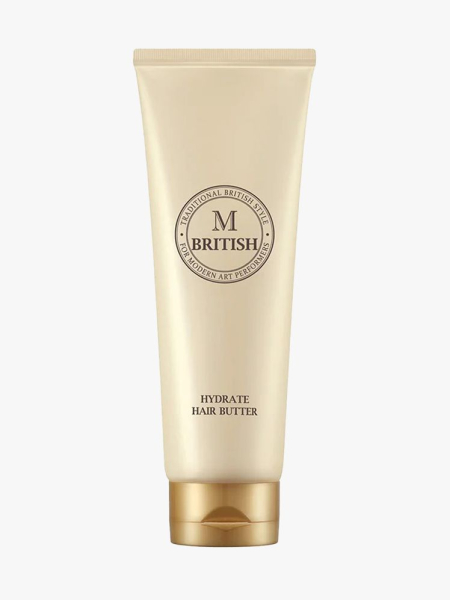
    British M Hydrate Hair Butter in branded component on a light gray backgroundSave to wishlistSave to wishlist

    British M

    Hydrate Hair Butter

    $34

    Soko Glam

    $33

    Olive Young

    Why it's worth it: Just because it’s called a hair butter doesn’t mean you’re signing up for grease. British M’s Hair Butter is all about how it melts—rich in the jar, but seamless once it hits your strands. The formula pairs shea butter and argan oil for deep moisture with a blend of hydrolyzed collagen, oat protein, and sweet almond protein to help reinforce dry, weakened hair. You’ll also find ceramides and hydrogenated lecithin, a skin-identical lipid commonly found in K-beauty that helps smooth the hair cuticle and seal in moisture, so strands feel softer and more resilient rather than coated. “This is a professional favorite in top salons in Korea for a reason,” says Choi, who particularly loves it for thirsty, coarse, or curly hair that needs serious moisture control. She notes that while the texture feels indulgent, it’s “rich but breathable,” delivering frizz control and definition without leaving hair greasy or flat.

    More to know

    AccordionItemContainerButtonLargeChevron

    • Key ingredients: argan oil, shea butter, hydrolyzed collagen, oat protein, sweet almond protein, ceramides, lecithin
    • How to use: after shampooing, gently towel-dry your hair, leave in for 5 to 15 minutes, then rinse thoroughly
    • Fragrance-free: no

    Best Leave-in Treatment: Anillo Rosy Night Repair Hair Essence
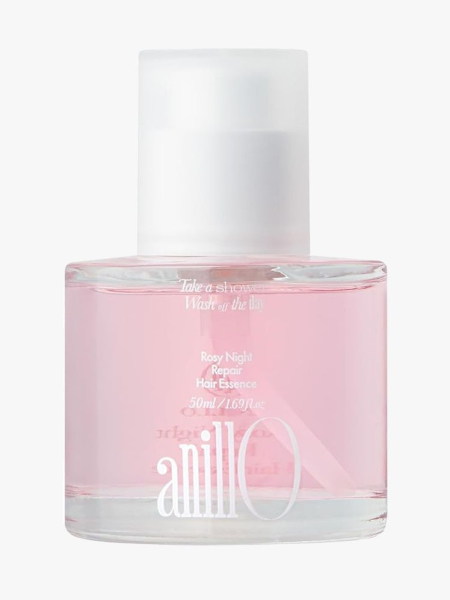
    Anillo Rosy Night Repair Hair Essence in branded component on a light gray backgroundSave to wishlistSave to wishlist

    Anillo

    Rosy Night Repair Hair Essence

    $18

    Amazon

    $18

    Soko Glam

    Why it's worth it: Anillo’s Rosy Night Repair Hair Essence does double duty—wear it as a nourishing pre-shower treatment, or use just a drop or two as a leave-in oil on no-wash days to calm frizzy hair and add shine. The formula pairs lightweight silicones with skin-care ingredients that gently treat hair and scalp over time. One standout is lithospermum erythrorhizon root (known as jichi in Korean), a traditional hanbang ingredient known for its calming, restorative properties—here, it helps soothe stressed strands and support a healthier hair environment.

    You’ll also find camellia japonica seed oil, ceramides, peptides, and panthenol to smooth the cuticle and reinforce softness without heaviness. Choi explains that the oil “nourishes the strand rather than suffocating it.” Cho calls it “one of my favorite finishing products for instant shine,” adding that it makes hair look “smoother and more polished without feeling greasy.” She also loves the “musky floral fragrance that feels elevated and lingers in the best way,” which means it doubles as a subtle hair perfume so that you can skip your typical spritz.

    More to know

    AccordionItemContainerButtonLargeChevron

    • Key ingredients: lithospermum erythrorhizon root, camellia japonica seed oil, ceramides, peptides, and panthenol
    • How to use: apply a generous amount to dry hair and shampoo as normal, or use a few drops as a hair oil
    • Fragrance-free: no

    Frequently Asked Questions

    What makes Korean hair masks different from Western hair masks?

    Korean hair-care products generally stand apart because they’re designed to treat the scalp—not just smooth the strands. “The main difference is that Korean hair treatments treat the scalp while Western hair treatments focus on the hair shaft,” says Dr. Jhin. Many Western formulas rely on heavy proteins, keratin treatments, and silicone-rich conditioners to repair damage and deliver instant shine, while Korean hair care looks at “long-term follicle support,” she explains. “The scalp is treated with the same level of care and attention as the face,” to create a healthy foundation for strong, beautiful hair.

    That philosophy carries through to the ingredients. Korean hair treatments commonly use botanical extracts like ginseng, camellia oil, rice water, and green tea, along with fermented ingredients that enhance absorption and nourishment. You’ll also see gentle exfoliating acids such as salicylic or lactic acid to support scalp renewal, plus soothing ingredients like Centella asiatica and panthenol to strengthen the scalp barrier. Proteins and ceramides are still part of the mix, but they’re “thoughtfully balanced with hydrating and anti-inflammatory ingredients rather than being the sole focus,” Dr. Jhin says—making the overall approach gentler, more preventative, and more holistic.

    Are Korean hair masks good for fine hair?

    Korean hair masks are a great fit for all hair types, especially fine hair, thanks to their formulation. Dr. Jhin explains that Korean hair care treats the scalp “with the same care and intention as facial skin care,” viewing it as the “soil” from which healthy hair grows. When that foundation is clean, balanced, and nourished, fine hair is less likely to struggle with excess oil, irritation, or breakage.

    Meet the experts

    • Charlotte Cho, esthetician and co-founder of Soko Glam based in New York City
    • Cherin Choi, a hairstylist and colorist based in Los Angeles
    • Marie Jhin, MD, a board-certified dermatologist of Premier Dermatology, adjunct clinical instructor at Stanford University, and author of Asian Beauty Secrets and K-Beauty Secrets based in San Carlos, California

    How we test and review products

    When Allure tests a product, our editors look at it from every angle in an effort to best serve you. We review ingredients, scrutinize brand claims, and, when necessary, examine peer-reviewed scientific and medical studies. In addition to testing each and every product that's included in each and every review, we rely on experts who shape their fields, including dermatology, cosmetic chemistry, and medicine, to help us vet the ingredients and formulas.

    For our list of the best Korean hair masks, we considered each product's performance across five primary categories: product ingredients and efficacy, packaging, fragrance, texture, and product wear. Every product was determined to have excelled in each category by our editorial team of in-house writers and editors, as well as contributors, along with special consideration from makeup artists and dermatologists. To learn more about our reporting and testing processes, read our complete reviews process and methodology page.

    Our staff and testers

    A beauty product is a personal purchase. You might be searching for a face cream to address persistent dryness or a new nail product to add to your Sunday self-care routine; you may simply be browsing around for the latest launches to hit the hair market. No matter what you seek or your individual needs and concerns, Allure wants to ensure that you love anything we recommend in our stories. We believe that having a diverse team of writers and editors—in addition to the wide range of outside testers and industry experts we regularly call upon—is essential to reaching that goal.

    After all, can we really say a skin-care product is the "best" for people over 50 if the only testers we've solicited opinions from are folks who have yet to hit 30? Can we honestly deem a high-end diffuser worthy of your hard-earned cash if it's never been tested on curls? We're proud that our staff spans a wide range of ages, skin tones, hair textures, genders, and backgrounds, which means that we are able to fairly assess any beauty product that comes into the beauty closet.
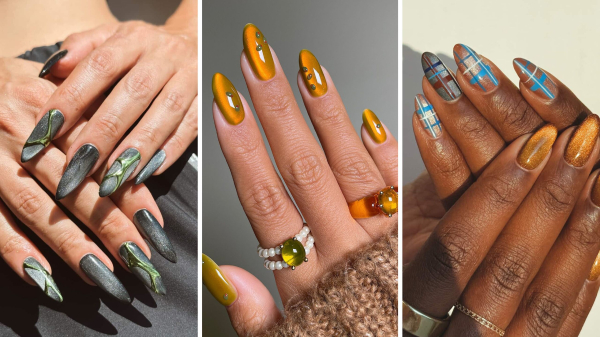

  • Velvet Nails Got a Trendy Update for 2025

    Velvet Nails Got a Trendy Update for 2025

    Velvet nail art trendSource images: Courtesy of @sansungnails, @nailartbyqueenieSave StorySave this storySave StorySave this story

    I hate long nail appointments. I get restless when sitting for extended periods with nothing to do. (I can’t even scroll on my phone!) That’s why I have typically avoided nail art unless it was for a special occasion—that is, until I discovered velvet nails. Velvet nails mimic the fuzzy texture of your favorite holiday dress, but with an added touch of sparkle.

    Velvet nails always come back during the holiday season, but this year, the look is making its rounds early. It’s easy to see why: "The effect is magical," says Hannah Lee, a nail artist in Atlanta. “The way the light plays off the magnet-activated texture gives them a depth that feels modern and refined.” It’s also easy to combine with other nail trends for a look that has a bit more impact.

    Instagram / @nailjob

    Another reason this manicure’s popularity might be rising now is the impending recession. Even some of us Allure editors have found ourselves opting out of “tier-three” (intricate) nail art looks for financial reasons. An allover velvet manicure is usually classified as “tier one” (simple) at salons, even if the effect is as eye-catching as a tier-three look.

    For context, in a major city like New York, detailed nail art can run you about $14 per nail, on top of the $150 price for a basic gel manicure with nail extensions. At Art Nail NYC, where I got my first allover velvet set, the mani was considerably more affordable (and less time-consuming) because it was classified as a simple design.

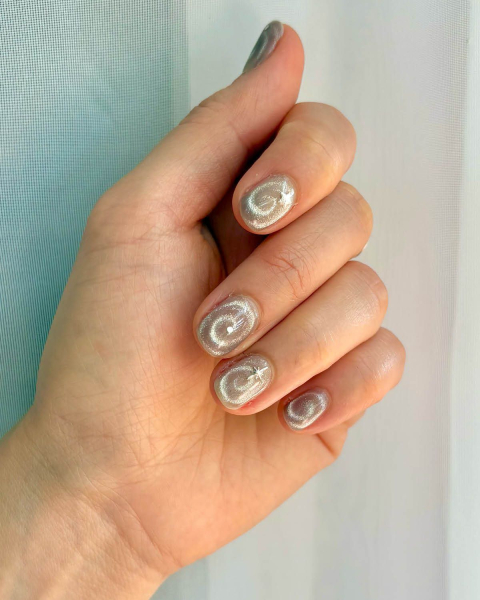
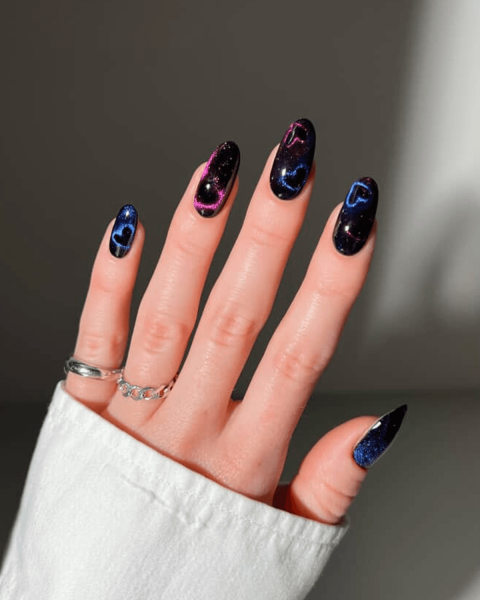
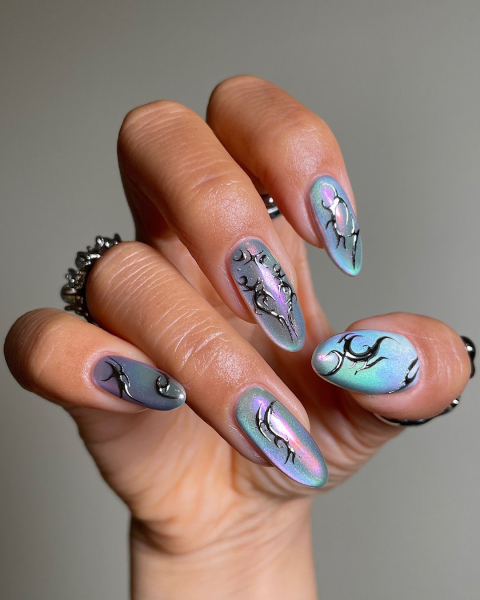
    You’ll likely hear people call these cat-eye nails. They’re not wrong; the way we see it, though, all cat-eye nails are velvet, but not all velvet nails are cat-eye. The distinction is in how the shimmering magnetic particles are dispersed. The particles in cat-eye nails usually form a straight or diagonal line (mimicking the look of a cat’s eye), while the particles in velvet nails can be spread out uniformly or in patterns like hearts and swirls.

    Swirl Velvet NailsCourtesy of @sabletoothtigerClose up of black and blue velvet manicureCourtesy of @heygreatnailsThe modern velvet manicure

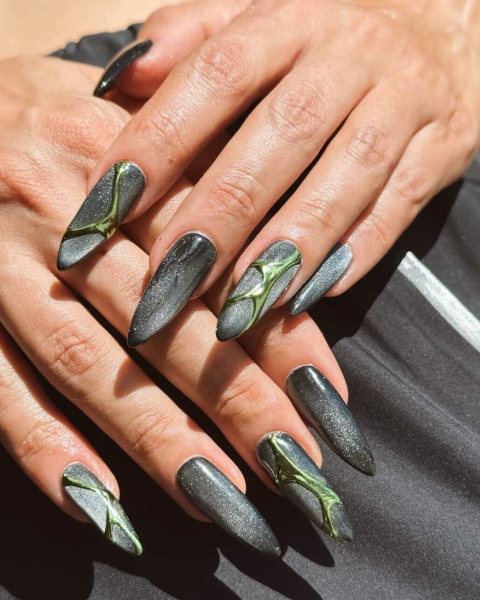
    According to Eunice Park, brand development and education director at Aprés Nail, velvet nails now look very different than those of the past. “When I was in nail school in 2015, the magnetic particles were a lot chunkier and were against a black base,” she explains, noting that the finished look was always dark. “You’d see black with emerald green or dark purple glitter.”

    Magnetic polish formulas needed a black base for the glitter particles to appear shinier, Park continues. Now, brands are formulating velvet polishes with finer magnetic particles (so there are more of them), so the glitter appears softer and more subtle—but with just as much shine. “I think that's what's extending the velvet nail-trend's life,” she says. “You're getting all these different variants of the look.”

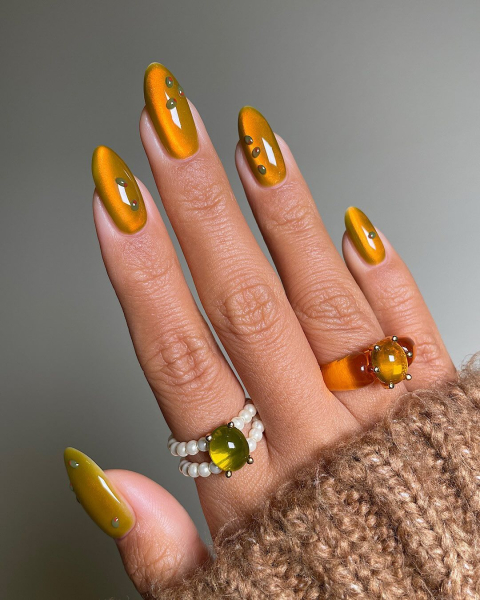
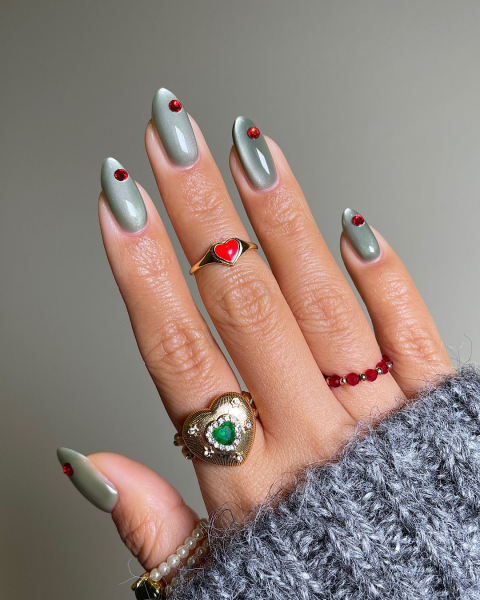
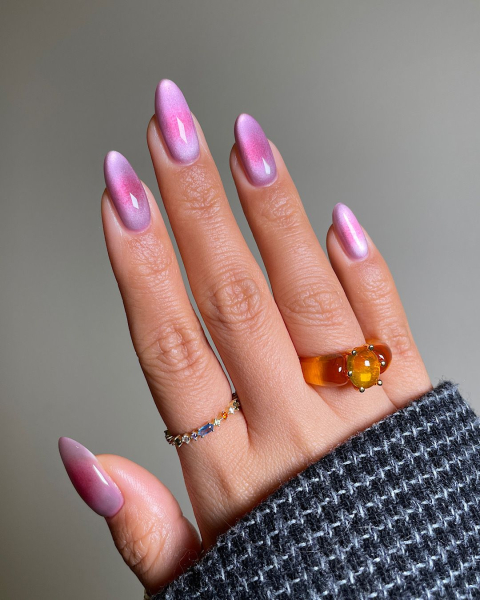
    In addition to more sophisticated nail polish formulas, we’re seeing manicurists get more creative with their art. They have been pairing the velvet finish with “chrome, subtle jewels, or artistic sculptural,” says Lupita Alonso, a nail artist in Stone Park, Illinois. We’ve also seen it with heart motifs and manipulated into ombré designs. “These details make it look more updated and modern.”

    How to create velvet nails

    Sure, the appointment can be shorter than other nail art appointments, but I understand if you still want to skip the salon trip completely and DIY your velvet nails. You’ll need a few things, though, like a base coat, topcoat, magnetic nail polish, and a magnetic wand. (Mooncat sells the magnetic wand on its own, but will include one for free if your order includes a magnetic polish.)

    First, coat your nails with a base polish before applying a magnetic polish. Then, use a magnet to disperse the shimmery particles across the nail to create that glistening velvet effect. Holding the magnet at the tip or side of the nail creates the velvet effect, while holding it above the nail's center drags the particles into a straight line for the traditional cat-eye look.

    If you're not ready to wield a magnetic wand, Bana Jarjour, a Los Angeles-based nail artist, suggests trying gel nail strips. (Note: This method does require you have an LED lamp.) She recommends the Dashing Diva Glaze strips, which come pre-painted with a velvet design. All you need to do is apply the adhesive strip to your nail, cut it to your desired length, cure it with an LED lamp, and file it into the shape you want. We also recommend press-ons; Static Nails has a velvet press-on set that will give you a salon-level manicure in seconds.

    Looking for inspiration? Scroll for some of the prettiest velvet nail ideas, including looks that are simple enough to do at home and works of art you might want a professional to help create.

    Velvet Nails Inspiration

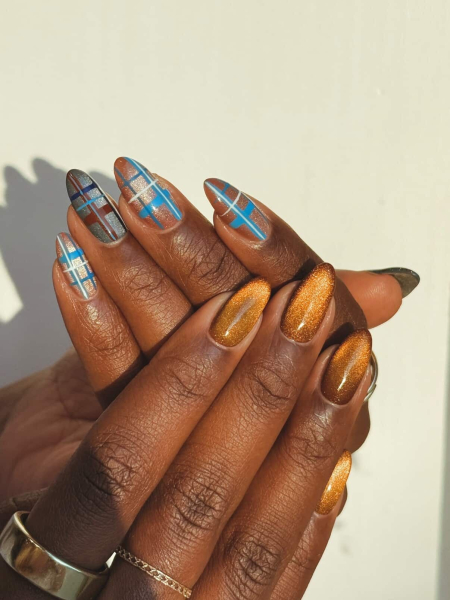
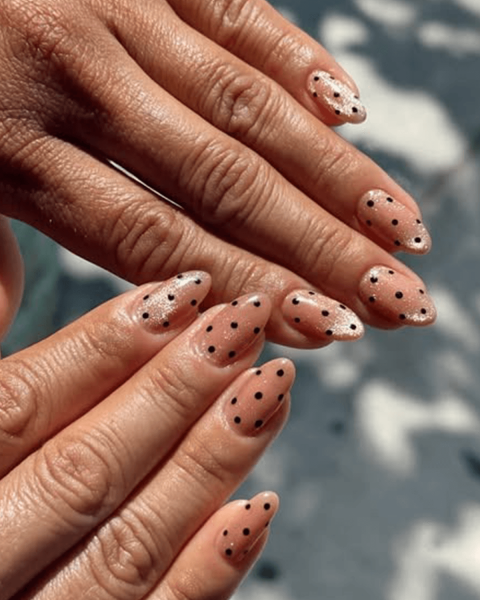
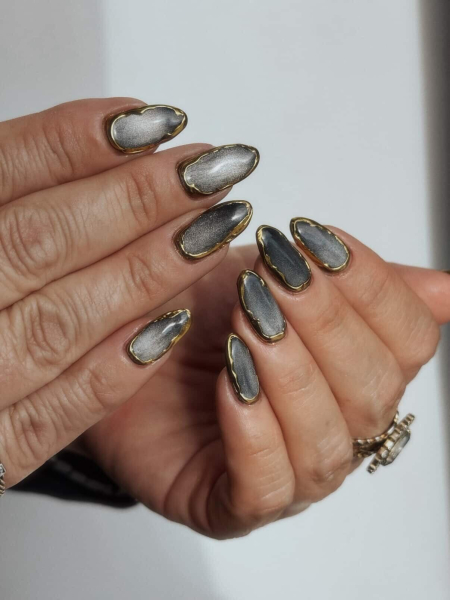
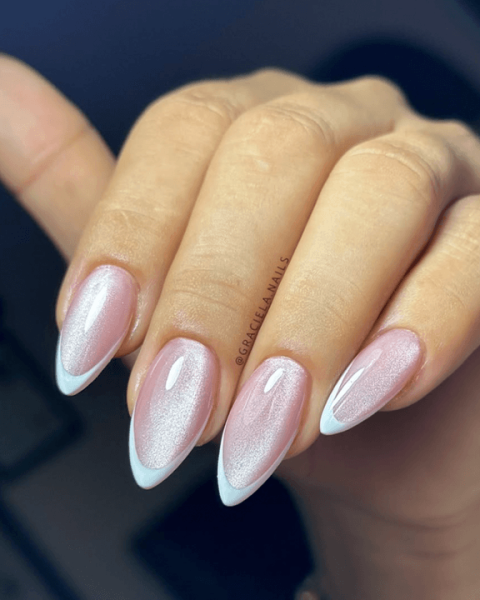
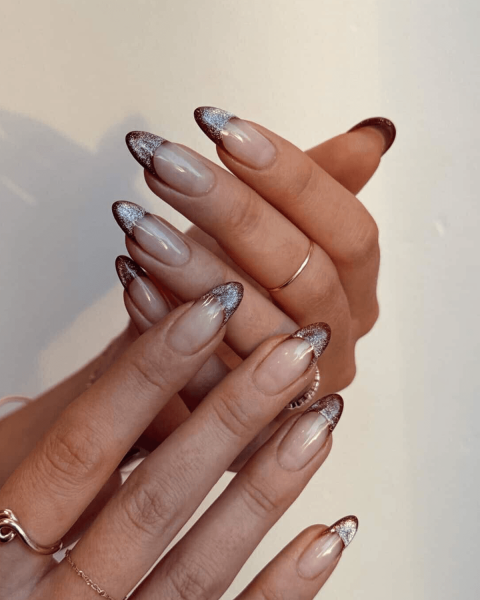
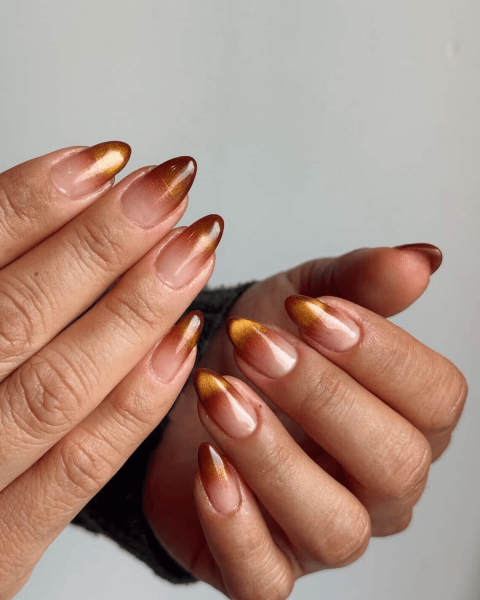
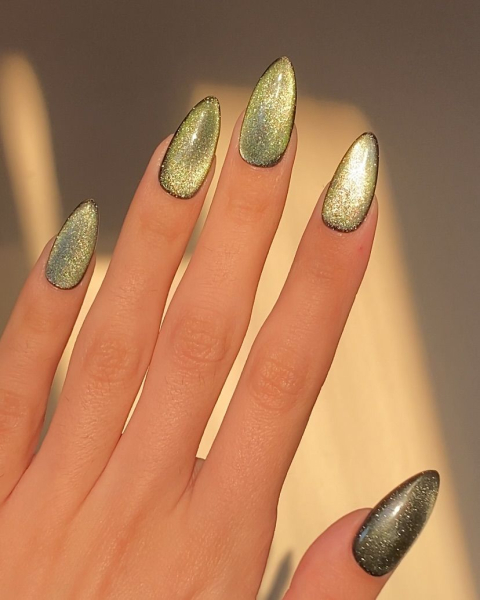
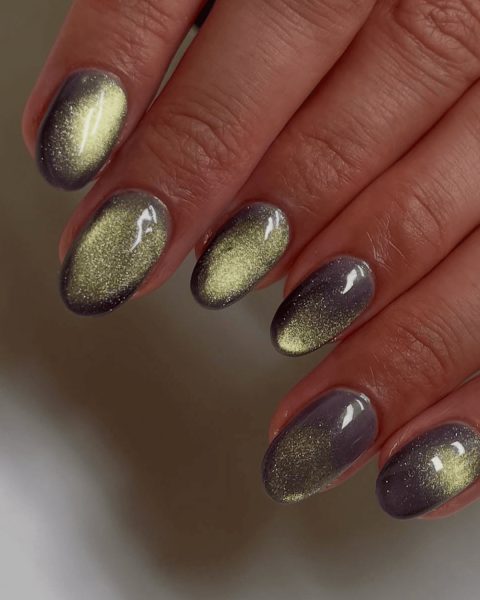
    Plaid velvet nailsVelvet plaid nailsCourtesy of @nailartbyqueenieVelvet polka-dot nailsClose up of a nude and polka dot velvet manicureCourtesy of @nailartbyqueenieSheer velvet nailsClose up of a clear velvet manicureCourtesy of @overgloweditVelvet frame nailsGray velvet nails with gold frame designCourtesy of @nailartbyqueenieClose up of velvet brown and nude nailsCourtesy of @nailsbyshirlecropVelvet French nailsClose up of a velvet baby pink french manicureCourtesy of @gracielanailsClose up of brown and glittery Velvet french nailsCourtesy of @nailartbyqueenieOmbré velvet nailsClose up of a brown and orange ombre manicureCourtesy of @nailartbyqueenieGreen-and-black velvet nailsGreen cateye nailsCourtesy of @sofiamiroslavanailsGreen and Gray Velvet NailsCourtesy of @nailsbyshaniVelvet amethyst frame nailsPurple cateye nailsInstagram / @heygreatnailsVelvet nails with 3D embellishmentsClose up of yellow and green nails with green studsCourtesy of @sansungnailsClose up of velvet green nails with red studsCourtesy of @sansungnailsVelvet aura nailsClose up of a pink velvet manicureCourtesy of @sansungnailsChrome velvet nailsClose up of velvet pink and blue nailsCourtesy of @sansungnailsGray and green Chrome Velvet nailsInstagram / @nailartbyqueenie

  • Quiet Silver Is the Most Seamless Way to Go Gray

    Quiet Silver Is the Most Seamless Way to Go Gray

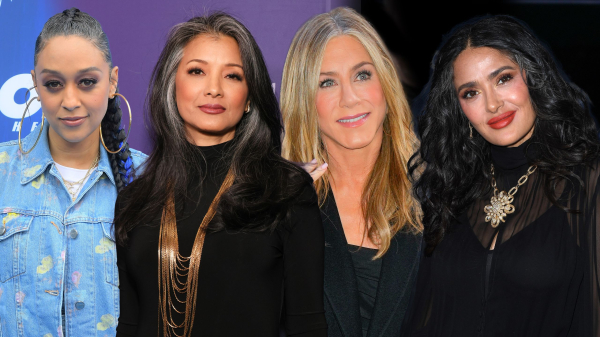
    Tia Mowry Kelly Hu Jennifer Aniston Salma HayekPhoto: Getty ImagesSave StorySave this storySave StorySave this story

    We've been conditioned to feel a certain urgency when we notice our first few grays. Commercials for at-home hair color, going back decades, would have you believe that the only course of action after a few silver strands show up is cover, cover, cover. (Never yoink, though—old wives' tales would have you believe that plucking one gray hair will trigger more to grow in.) The “quiet silver” trend rebuffs the notion that grays must be hidden, allowing for the previously frowned-upon blend of gray and color to shine.

    The concept of easing into your gray era isn’t exactly new. We’ve reported on how colorist Farah Hurdle does it at her San Diego salon. But as with many trends, it’s been rebranded—this time by Annabelle Taurua of Fresha, a booking platform, who coined “quiet silver” while speaking to Glamour. But the question remains: Why is the conversation about being okay with your grays coming up yet again?

    How to achieve quiet silver hair

    The process of going gray gracefully is extremely personal. After all, everyone arrives at the salon with a different base color, varying degrees of gray, and unique goals. It starts, though, with a professional consultation.

    Hurdle, who calls her approach to quiet silver “greyblending,” previously told Allure it’s all about distraction. “Initially, we’re trying to highlight the areas where they have more silver, and then on the areas where they might be darker, we’re lowlighting,” she said, explaining that she uses toners and demi-permanent color to add dimension around the gray.

    L’Oréal Professionnel is launching a hair-color application method to achieve this. Called “French blending,” it’s “designed to match every level of gray acceptance,” says Jacob Habib Khan, a stylist and global creative contributor for the brand. "We formulate the shade that's right for you using one of three different coloring techniques—first blending, retouch blending, and total blending—to not only cover gray hair, but also blend them for a more natural look and seamless grow-out.”

    First blending involves creating contrast with the first patches of gray for a natural, camouflaged look. This restrained approach ensures softer regrowth between salon appointments. With retouch blending, the goal is to move away from the “helmet effect” line of demarcation that comes with gray coverage, softening the banding. Total blending fully embraces grays for a more visible transformation.

    French blending, overall, is based on a highly personalized strategy. “For some clients, it could take a micro-teasing approach—which involves gently back-combing tiny, thin sections of hair before applying lightener—and others could be candidates for a balayage,” Khan says. “It’s all about mirroring and re-creating the gray pattern to give the best possible blend for each client.”

    If you think starting with lighter hair might make for an easier path to quiet silver, you’re not wrong. “I do think it’s a bit more of a seamless look on someone with a lighter natural hair color,” says Suarez. “The blend is much better since the two colors do not have such a stark contrast.” But that doesn’t mean it’s out of the question for those with dark hair. Says Khan, “absolutely any hair color” can look gorgeous with gray mixed in.

    How to maintain quiet silver hair

    It might take a while for you to decide to move forward with fully embracing your gray. Staying in this quiet silver phase is completely okay. To maintain it, Suarez says, it’s key to consider your base color and how much warmth you’re willing to tolerate. For lighter colors, she recommends using a purple shampoo once a week to keep your tones from getting too brassy. We’re fans of the Allure Best of Beauty Award-winning milk_shake Icy Blond Shampoo, as well as Pravana Perfect Blonde Toning Shampoo. For darker hair, Suarez says, use a color-safe shampoo that won’t strip away the richness of your deeper tones. Biolage Color Last Shampoo or Wella Ultimate Color Shampoo should do nicely.

    Not convinced it’s time to mix it up? Take a look at some celebrity examples, and you may find that quiet silver is practically screaming at you to go to the salon.

    Quiet Silver Inspiration

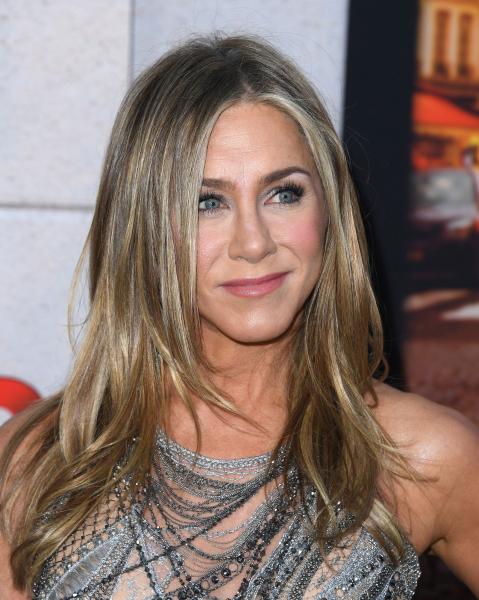
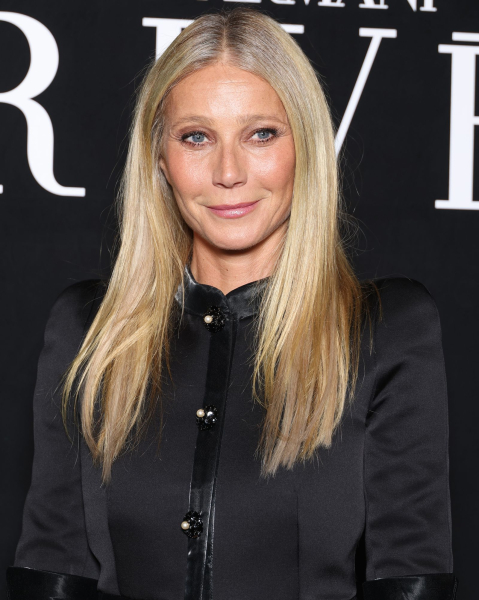
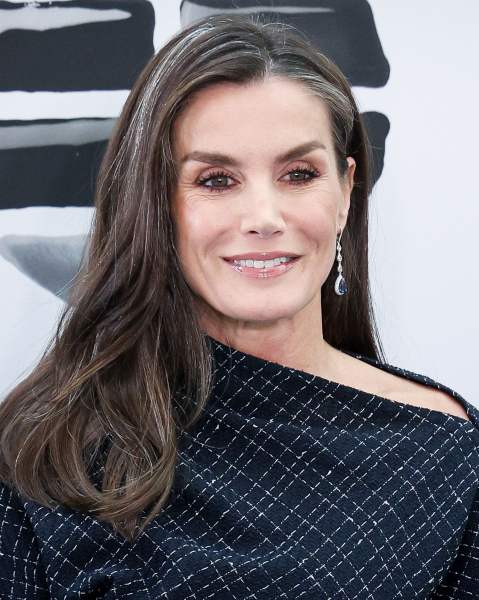
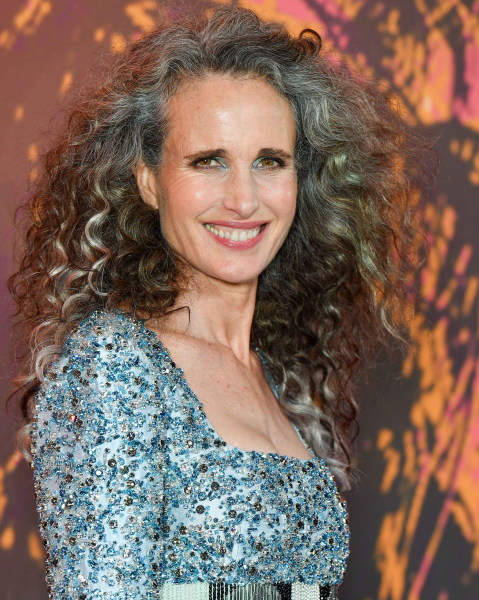
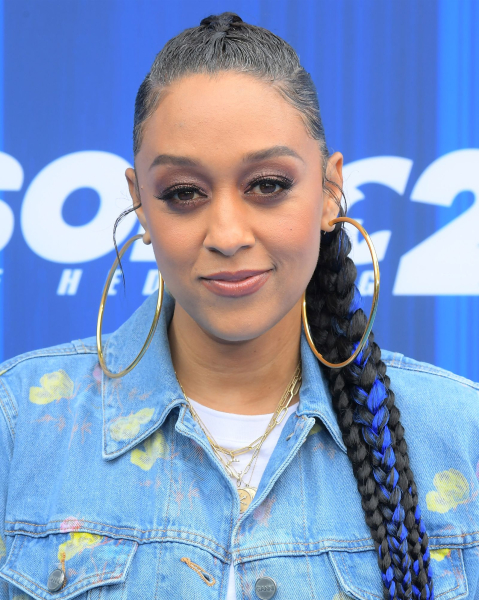
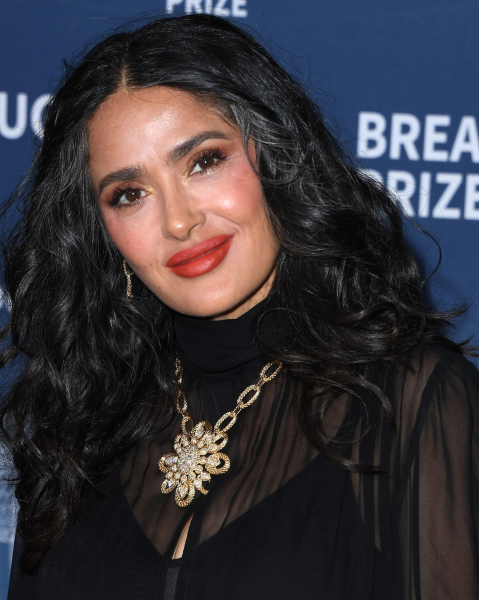
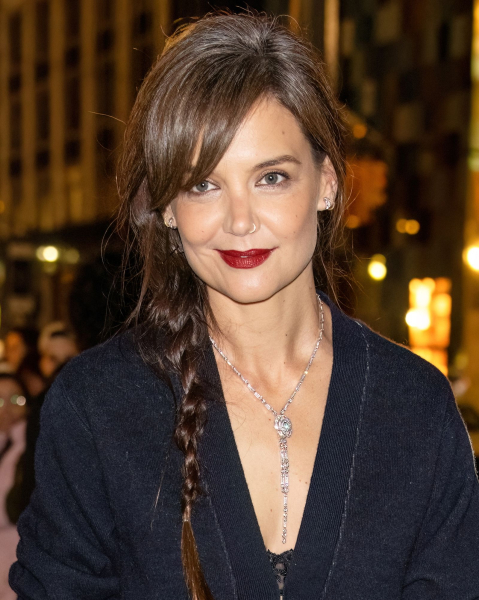
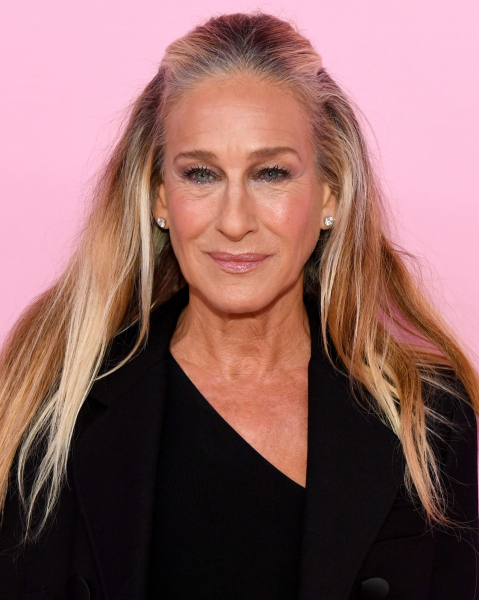
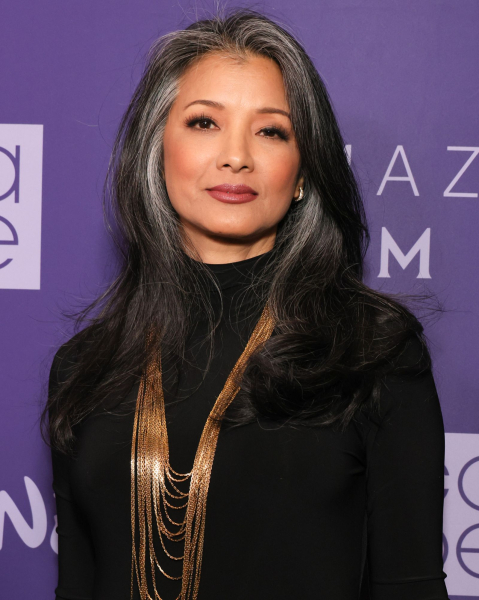
    Jennifer Aniston posing a gray beaded dressPhoto: Getty ImagesGwyneth Paltrow posing in a black jacketPhoto: Getty ImagesQueen Letizia of Spain smiling in a black and white dressPhoto: Getty ImagesAndie MacDowell smiling in a blue beaded dressPhoto: Getty ImagesTia Mowry wearing a bluestreaked braid and denim jacketPhoto: Getty ImagesSalma Hayek posing in a sheer black top and gold necklacePhoto: Getty ImagesKatie Holmes wearing a braid and dark cardiganPhoto: Getty ImagesSarah Jessica Parker posing in a black dressPhoto: Getty ImagesKelly Hu posing in a black turtleneck and layered gold necklacesPhoto: Getty Images

    Meet the experts

    AccordionItemContainerButtonLargeChevron

    • Jacob Habib Khan is a hairstylist and L’Oréal Professionnel global creative contributor.
    • Victoria Suarez is a colorist at Anushka Spa & Salon in Palm Beach.
    • Chloe Williams is a hairstylist and co-owner of He+Loe Studio in Delray Beach, Florida.

    Read about the latest trends:

    • Horny Yearning Is the Season’s Hottest Beauty Trend
    • Bangs Are Getting Bolder in 2026
    • The Biggest Hair Trends of 2026 Bring the Drama
    • 6 Nail Polish Colors That’ll Be Everywhere in 2026
  • Harry Styles Low-Key Addressed Those Hair-Transplant Rumors—Watch the Video

    Harry Styles Low-Key Addressed Those Hair-Transplant Rumors—Watch the Video

    Harry Styles poses in a jacket jeans and green shoes.Getty ImagesSave StorySave this storySave StorySave this story

    Harry Styles is fully aware of those conversations about his hair.

    In a new interview with comedian Brittany Broski on her series Royal Court, Styles subtly addressed ongoing speculation about his hairline and whether or not it's genuinely his or the result of a hair transplant.

    But let's back up a bit, shall we? Where did all this chatter come from in the first place? Rumors about Styles's hair, which has always been one of the signature elements of his look, began a few years ago, fueled in part by the celebrity gossip account DeuxMoi.

    In 2022, someone sent a tip about an “A list [sic] musician/occasional actor” who had “gone almost completely bald,” and claimed that the person in question wore a very good hairpiece. After some speculation that it was Machine Gun Kelly, which the poster denied, many people thought it might be Styles, who has done some acting outside of his music career.

    Styles, however, never confirmed nor denied the rumors. In 2023, he (shockingly!) shaved his head, and has since been wearing his hair short. (And that short cut is how he ended up in the crowd at the Pope's election, in case you were wondering.)

    During their conversation, Broski asked Styles—who also happened to be wearing elf ears along with his royal-themed ensemble for the show—if his teeth were fake, and Styles took that moment to subtly nod at the hair transplant rumors. He denied having fake teeth, then slyly joked, “This hairline, though…” But that was all the Kiss All the Time. Disco, Occasionally singer shared about the ongoing hair convo, so we'll leave that little wink up to your analysis!

    Styles may not have elaborated on his hair situation for the Royal Court appearance, but he has talked about it in the past. In 2022, he told Rolling Stone that he was aware of the discourse surrounding his luscious brunette hair, noting that a friend brought the DeuxMoi rumors to his attention at the time. “He won’t stop sending me messages about [people] trying to work out if I’m bald.”

    He then told writer Brittany Spanos that he was not bald. “What is it with baldness? … It skips a generation or something, right? If your granddad’s bald then you’ll be bald? Well, my granddad wasn’t bald, so fingers crossed.”

    Watch the full interview below:

  • E.L.F., Revlon, and Bath & Body Works Are Suing the Trump Administration Over Tariffs

    E.L.F., Revlon, and Bath & Body Works Are Suing the Trump Administration Over Tariffs

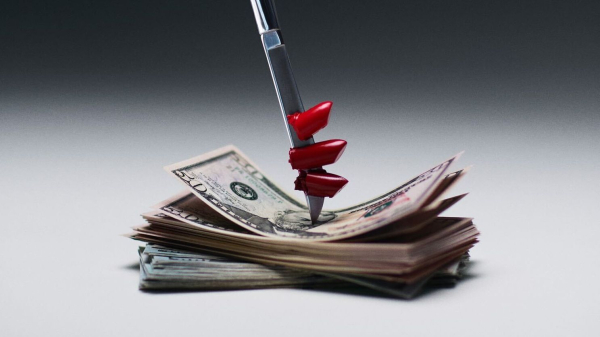
    Knife with lipstick on the blade stabbing stack of moneyPhoto by Giancarlos Kunhardt; Prop stylist: Andrea BoninSave StorySave this storySave StorySave this story

    UPDATE (February 25, 2026): Numerous beauty brands were already in the process of suing the Trump administration over tariffs—which foreign countries do not pay, despite what the president said in the State of the Union address on February 24—prior to any Supreme Court decision about their legality. And now that the tariffs have been struck down in a 6-to-3 ruling, it appears the litigation door has opened wider.

    Business of Fashion reports that three more major beauty and personal-care companies are now joining the growing pile of lawsuits in search of tariff refunds. On Monday, February 23, L'Oréal, Dyson, and Bausch + Lomb (makers of Lumify) all filed new suits. This was followed by a filing from Sol ‌de Janeiro.

    Trump has suggested he does not need Congressional approval to implement tariffs and told reporters that these refund-seeking lawsuits will be tied up “in court for the next five years.”

    This post originally appeared on January 9, 2026.

    Trying to keep up with tariff news, especially as a consumer who isn't necessarily an expert in economic policy, can feel like dodging sporadic jump scares. Fluctuating percentages on different types of goods from various countries haven't just left average Americans befuddled; they have also left many of us acutely aware of how much more we're spending on the same products we could get for less just a year ago—and that includes beauty products.

    As Allure has previously reported, Americans have been expected to pay anywhere from 10 to over 60% more on imported skin care, makeup, and other personal-care items. And while it's up to individual companies to decide whether or not they want to pass tariff-related costs on to the consumer, “Evidence suggests prices would likely go up by the amount of the tariff,” according to Philip Rothman, PhD, professor of economics at East Carolina University.

    Consumers have very few options: Pay more for the products we love or try to find comparable but less expensive products. Many companies, however, are now exercising another option: suing the Trump administration over the tariffs and, to put it simply, demanding refunds.

    Ever since the Supreme Court cast doubt on the legality of Trump's trade policy in November, Bloomberg reports, more than 1,000 corporate entities have filed lawsuits over the billions of dollars in import duties collected by the administration—levies paid by those entities (and often passed on to consumers in the form of higher prices).

    That includes some very recognizable beauty brands. Among the cosmetic and personal-care companies taking the Trump administration to court over tariffs: Revlon, E.L.F. Beauty, Schick, Conair, and Bath & Body Works.

    It's unclear how these lawsuits can and will unfold. Regardless of how the Supreme Court rules—which could happen as early as today or as late as June, according to Forbes—a number of outcomes are possible, from the lawsuits being kicked down to lower courts to the Trump administration potentially attempting to impose the tariffs through other legal channels.

    What's even more unclear is what corporations will do if they do, in fact, recoup their tariff fees. But as long as tariffs are in place, it's likely that beauty consumers will continue to see that reflected in the prices of their favorite products.

  • Yes, the ‘Survivor’ Contestants Are Getting Cosmetic Procedures

    Yes, the ‘Survivor’ Contestants Are Getting Cosmetic Procedures

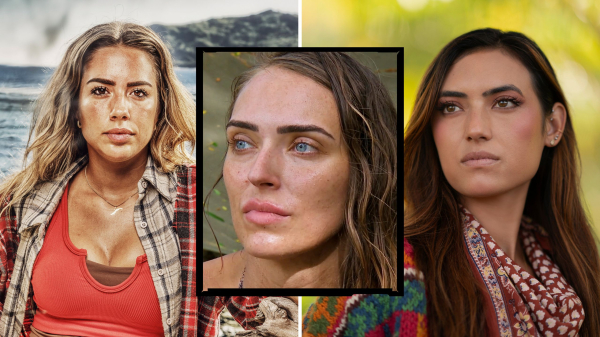
    three survivor contestants from seasons 49 and 50Source images: Courtesy of CBSSave StorySave this storySave StorySave this story

    Warning: Spoilers for Survivor seasons 49 and 50 ahead.

    Before she arrived in Fiji to compete on Survivor season 49 last April, Savannah Louie amped up her workout routine. She took bootcamp classes to improve her strength and endurance, did hot yoga to condition her body for the island heat, and worked out after fasting to get used to exerting herself while hungry and weak. She prepped aesthetically, too. Before the 26 days of filming began, she made a point of getting a gel manicure and having her hair colored. She’d already gotten laser hair removal, and was reaping the wrinkle-reducing benefits of a recent Botox appointment. After all, on Survivor you don't have access to makeup, skin care, or even a shower—but Louie and some other contestants still managed to look camera-ready at all times.

    As a former newscaster, Louie already knew how much work it takes to look good on screen. But she wasn’t the only contestant that season who prepared this way—and fans noticed. "Why does this cast seem so well-groomed and polished?" asked one Redditor in r/survivor. In the comments, fans speculated on a laundry list of beauty treatments contestants might have had done: Eyebrow microblading and lamination, lip blushing and tinting, lash lifts and extensions, laser hair removal, keratin hair treatments, teeth whitening, gel manicures, Botox, fillers, the list goes on.

    They weren’t wrong. But pre-show cosmetic interventions haven’t always been the norm. The competition series has a long and complicated relationship with beauty—and the contestants' newly snatched appearances reflect not just the way the show has changed but the way society around it has changed, too.

    Sage AhrensNichols on survivor season 50

    Sage Ahren-Nichols on season 49.

    Photo: Courtesy of CBS

    Survivor premiered in 2000, and watching the early seasons, you can tell. Beautiful women (and men—you've seen photos of Boston Rob in 2002, right?) were key to the show’s marketing strategy. One of its most-referenced early scenes featured contestants Heidi Strobel and Jenna Morasca stripping naked in exchange for chocolate and peanut butter in a 2003 episode titled "Girls Gone Wilder." In 2015, CBS promoted the show on its website by publishing a photo slideshow of female contestants with the headline "The 36 Hottest Bikinis Ever Worn on Survivor."

    But back then, beauty on Survivor was a lot less… polished. Parvati Shallow, one of Survivor's best-known players, first competed on Survivor 13: Cook Islands in 2006 and went on to compete in four other seasons through 2025. She tells me that when she found out she’d been cast on the show for the first time, she only had one piece of beauty prep in mind. "The only thing I did before Cook Islands was laser hair removal for my bikini and my underarms," Shallow says, recalling the way cameras would often pan up and down women’s bodies. "There is always a challenge where you're holding your arms over your head. I saw that and said, 'I'm not gonna be the girl with the hairy pits.'" But otherwise, she says, "On Survivor, you're going to be covered in dirt and look a little like a caveman. I just accepted that." Her prep remained low-key for her next three appearances, but for Survivor Australia v. the World in 2025, she says she got Botox "because I get very squinty in the sun."

    I'm a relatively recent Survivor fan. In the past 14 months, I've watched 30 seasons and counting, spanning 25 years of television, and have witnessed a time-lapse of changing aesthetic ideals. Survivor is a particularly interesting example of changing beauty trends because contestants don't have access to makeup or skin care products on the island—save for sunscreen (more of a health necessity than a beauty one). You don't see makeup trends like the Tumblr-beloved winged eyeliner, colorful eyeshadow, or bold matte lipstick, but you can pinpoint when microblading went mainstream (season 30 from 2015). In the early seasons, many of the female contestants are thin, pretty, and often wearing skimpy bikinis—but their faces are bare with scant lashes, faint eyebrows, and foreheads that crinkle naturally with their facial expressions. In contrast, many of today's female contestants have Botox-smooth foreheads, clear, dewy skin, dramatic brows and lashes, and sparkling white smiles.

    "To be perfectly honest… going on the show has made me a lot more self-conscious about how I look than before."

    Savannah Louie

    All this beauty prep isn't a secret; in fact, many female constants are happy to talk about it. In a pre-season interview, season 49 contestant Sage Ahren-Nichols told The Seattle Times that she thinks her fellow contestants misjudged her, in part, because her Botox made her appear unempathetic. During and shortly after season 49 aired, Louie and fellow contestants Sophi Balerdi and MC Chukwujekwu answered fan questions on TikTok about their on-island beauty looks; Balerdi credited a Grande Cosmetics serum for her long lashes, while Chukwujekwu shared that her glow during her first appearance on the jury was thanks to bug spray, not body oil as some assumed. That said, sometimes there’s nothing juicy to share: Balerdi tells me that Fiji’s humidity, sun, and salt water were responsible for her “Survivor glow.”

    If male contestants are engaging in pre-taping primping, they’re remaining tight-lipped about it—with the notable exception of Survivor New Zealand's Adam O'Brien, who revealed he got a whopping 36 units of Botox before competing so he could purposefully hide his expressions from his competitors (one has to wonder if he was also viewed negatively among his castmates like Ahren-Nichols says she was).

    Stephenie LaGrossa Kendrick on survivor season 49

    Stephenie LaGrossa Kendrick on season 50.

    Photo: Courtesy of CBS

    Other contestants beauty prep for reasons beyond the aesthetic, too. Tiffany Ervin says she got her hair braided before filming season 46 for practical purposes. "Being out there in the jungle with a curly afro is absolutely not a thing," she says. "It was a non-negotiable: I had to get braids." She decided to style her long box braids in Scary Spice-inspired space buns, which immediately made her stand out in press photos. "I thought it was a cute way to have a braided hairstyle but make it unique to me," Ervin says. She decided to recreate her hairstyle for her return on Season 50.

    And speaking of season 50—the first all-star season since 2020—trailers and cast photos ahead of its February 25 premiere have shown a transformation among returning contestants. Louie is returning for season 50; she got Botox during her short break between seasons. "When you hear Survivor 50 and you know how many resources are going into it and how much excitement there is, you want to look good," she tells me. "You can tell from just watching the trailer, the women are gorgeous. You can tell people have their eyelashes done and they look spectacular." She sees a difference in her own appearance between seasons 49 and 50, too: “When you watch the trailer for 50, I feel like I do look a little different. My forehead does look a little bit smoother, and I'm like, 'Thank you, Botox.'”

    stiffany ervin on survivor season 49

    Tiffany Ervin on season 50.

    Photo: Courtesy of CBS

    For other contestants, going on Survivor season 50 meant returning to the show for the first time in over a decade. Stephenie LaGrossa Kendrick is returning for season 50; she was just 24 when she first appeared on Survivor in 2005 and was 30 the last time she appeared on the show in 2010. "I'm 46 now. I don't look like I did in my twenties," she says. Her season 50 prep included laser hair removal, a series of facials, dermaplaning, an eyebrow tint and wax, a lash lift and tint, Botox, and collagen and peptide supplements. "In the new era, everybody's more contoured and everybody has the lashes and everybody has big perfect brows and all that because that's in," she says. “It's just another level of beauty, you know?”

    While contestants can be critiqued by fans for not looking well-groomed enough, those who are perceived as too polished can also get backlash. "It felt a little tricky on my first season of Survivor, because when someone looks at me, they immediately have a perception of me," says Dee Valladares, who won Survivor 46 in 2024 and is returning for season 50. Her well-groomed looks—she got Botox and microblading before her appearance—led some Survivor fans to perceive her negatively. "I've been told, 'You're from Miami and you might be stuck up.' I even got fans calling me a 'mean girl.' If I looked different and I said the same things, you might not say that about me, or if you met me in real life," she says. "But, you know, you're either loved or hated."

    savannah louie on survivor season 49

    Savannah Louie in season 49.

    Photo: Courtesy of CBSsavannah louie on survivor season 50

    Savannah Louie in season 50.

    Photo: Courtesy of CBS

    Louie says she was also frustrated by some of the fan commentary on her looks during season 49. "It's not a show about being the best-looking person on the beach, right?" she says. "I've been very surprised to get feedback talking about what I look like when the game is supposed to be about strategy and physical competition and social game. People are like, 'her smile is too toothy' or 'her eyebrows are crazy.' To be perfectly honest with you, I feel like going on the show has made me a lot more self-conscious about how I look than before."

    So, yes, Survivor contestants are looking more snatched than ever before—but can you blame them? It sounds like fan reactions would be even more brutal if they weren't. And honestly, it feels like everyone is looking more snatched than ever before, whether they’re on TV or not. "I know so many women in my circle who are not on TV who are getting the same treatments that I got when I was getting ready for Survivor 50 and Survivor 49," says Louie. "I think it's just a reflection of where our society is as a whole with beauty. And that's one of the cool things about Survivor—the game itself is a reflection of our society."

  • Jennifer Garner Says She’s Ruled Out Botox—But Not a Future Facelift

    Jennifer Garner Says She’s Ruled Out Botox—But Not a Future Facelift

    Jennifer Garner wearing an olive green blousePhoto: Getty ImagesSave StorySave this storySave StorySave this story

    Jennifer Garner is a woman who knows what she wants. And doesn't want. At least right now. Chatting with Kylie Kelce on her podcast Not Gonna Lie With Kylie Kelce, the star of The Last Thing He Told Me shared what cosmetic procedures she's currently willing and unwilling to get, but was also candid about not knowing how she may feel down the line.

    Kelce brought up that Garner had once said she wants to be able to move her forehead because it's “such a big part of my face.” And the actor confirmed she still very much feels this way.

    “I mean, of course, I've tried Botox and all that, but it takes very little to completely freeze my forehead,” she says. “And then I just feel so conspicuous, like I've got a walking billboard. I might as well get a tattoo of something, you know, across it. It's horrible. So no, the Botox in the forehead, unfortunately, is not for me.”

    But that doesn't mean she doesn't sometimes take issue with her lines. “I have creasy wrinkles, and I'm just—they're going to have to just be there. So sometimes I get bangs,” she says (though, we ought to note, she currently isn't keeping her forehead covered with any fringe). “Women have been doing it forever.”

    She isn't against seeing a dermatologist for some cosmetic poking, however. “Don't think that I don't have something in there,” she says, touching her cheeks, and assuring Kelce she hasn't had any actual surgery. "Once a year, I go see someone, and I'm like, do it. I'm a pincushion.” It's unclear if Garner means she gets filler, microneedling, or something else that calls for a pincushion metaphor, but we appreciate her candor nonetheless.

    “I can't really tell the difference after—that's what I've noticed. The more you spend on a dermatologist doing a bunch of things to your face, the less you can tell that they've done it. And somehow that's a good thing,” she says, laughing about how she just wants to look subtly refreshed. “I don't know why, but I will go pay them so much money to say, 'I don't want to see it.'”

    And her kids really don't want to see it. “My kids are like, 'Mom, promise us you'll never get a facelift.' And I say, ‘I am unlikely to rush toward a facelift,’” she says. “And yet, I refuse to make that promise, because I am me today, and I don't know how I'm gonna feel.”

    See the entire interview below.